Why Pet Memorial Portraits Matter in Your Living Room · Lily & Hendrix

Table of Contents
- Why a Pet Memorial Portrait Matters in Your Living Room
- How to Choose a Photo for a Pet Memorial Portrait
- Pet Memorial Ideas for Your Living Room
- Creating a Custom Pet Memorial Portrait from Photo
- The Emotional Comfort of a Living Space Tribute
- Frequently Asked Questions
Last Updated: October 19, 2026
Why a Pet Memorial Portrait Matters in Your Living Room
A pet memorial portrait living room display is more than a picture on your wall. It keeps someone you loved close, every single day. At Be Artistic Club, a custom portrait turns a photograph into something that captures not just how they looked, but who they were.
A portrait of your pet in your living room becomes a daily reminder of the bond you shared. The place where you spend most of your time becomes a space that holds their memory.
The bond between pet and owner
The relationship between a person and their pet is real, built on routine, trust, and unconditional presence. Your dog or cat was there when you came home. They knew your moods.
That bond doesn't disappear when they do. A memorial portrait acknowledges it. It says: this relationship mattered. This life mattered. And it's not hidden in a drawer or a digital folder, it's there while you have your morning coffee or sit on the sofa at night.
Turning grief into something visible
Grief is invisible. A portrait gives it a form. When friends visit, it opens a conversation, you can tell stories, say their name, laugh about their quirks or cry about missing them. Having a physical representation helps people move through grief rather than get stuck in it. A way of saying: I loved them. I still do.
How to Choose a Photo for a Pet Memorial Portrait
The photo you choose is the foundation of everything that comes next. When the pet has died, the choice carries more weight, you're picking from what you already have.
The good news: you probably already own the right photo. The one on your phone's lock screen. The one you sent to a friend the day after.
What makes a strong reference photo
A good reference photo is clear and bright. Natural light works best, a sunny afternoon by a window, not a dim room or a flash that washes out their features.
The best photos show your pet's face clearly. Eyes visible, expression readable.
Avoid photos that are:
- Blurry or out of focus
- Taken in very dim light
- Heavily filtered or edited
- Screenshots from videos
- Photos where your pet is very small in the frame
A close-up or medium shot works best, the shape of the muzzle, the set of the ears, the way the fur catches light.
Capturing personality over perfection
The photo doesn't need to be technically perfect. It needs to show who your pet was.
That slightly awkward angle where their ears stick up? Perfect. The way they always squinted in bright light? That's character. Ask yourself: does this photo remind me of them? Does it make me smile? If yes, that's your photo.
When you can't decide between two photos
This is common. A few practical ways through it:
- Pick the eyes. In a memorial portrait, the eyes do most of the emotional work.
- Pick the one other people recognise. Show two photos to someone who knew your pet, which makes them say "that's them"?
- Pick the everyday version. Not the show-day photo or the beach holiday, the one at the back door. The one on the couch.
- Consider a second portrait later. Many people start with the photo that feels most immediate and add another style down the track.
What happens to your photo after you upload it
You upload the photo through the portrait uploader, choose a style, and within about a minute you see a free preview of the painted version. Nothing is printed until you've approved it. Every portrait is then checked and adjusted by Lily, a real person, before it goes to print, where small things get caught, like a collar that reads oddly or a background that needs quietening.
If you're unsure whether a photo will work, upload it and look at the preview. It costs nothing to find out.
Matching the photo to the style you have in mind
Some photos suit some styles better than others.
- A clean, well-lit close-up suits a fine-art Studio Noir black and white portrait, where the focus is all in the face and the light.
- A softer, slightly hazy photo works beautifully as a watercolour wash, where the edges are meant to blur a little.
- A photo with personality in the pose, head tilt, cheeky expression, can carry a Wildflower Crown botanical study without feeling overly formal.
- A photo taken outdoors in warm light sits naturally in a golden hour style.
The preview will tell you more in a minute than any guide can in a paragraph.
Pet Memorial Ideas for Your Living Room
The way you display a memorial portrait shapes how it feels in your space. A few concrete decisions make the difference between a portrait that settles into the room and one that feels overlooked.
Placement and scale
Think about where your eyes naturally land when displaying a pet memorial portrait living room. Above the sofa? On a side wall? Near a window?
For scale, the artwork should take up roughly two-thirds to three-quarters of the width of the furniture it sits above.
Hang height: the centre of the portrait usually sits at about eye level when you're standing, or roughly 145 to 155 centimetres from the floor.
Light, glare and preservation
Natural light is kind to portraits, but direct sun is not. Soft morning light makes a portrait glow; harsh afternoon sun fades the print and throws glare across the glass.
- Avoid direct sunlight on the print. Indirect light is fine; a sunbeam landing on the same spot every afternoon is not.
- Watch for glare. If the portrait will face a window, consider a canvas or poster rather than a glazed frame.
- Keep it away from heat and moisture. Above a heater or beside a kettle, none of these are kind to a print over years.
- Hang it securely. Use the right wall fixing for your wall type, plasterboard, brick, or timber. A portrait that falls is a much worse memory than one that hangs slightly off-centre.
Balancing memory with everyday living
A memorial portrait is part of your home, not a shrine. It should feel natural, like it belongs there.
Some people worry a portrait of a deceased pet will make their living room feel sad all the time. The opposite is usually true.
If you live with other people, talk about placement together. Ask each person where in the room they'd most like to see it, then look for the overlap.
Smaller, subtler and renter-friendly options
Not everyone wants, or can have, a large framed portrait on the main wall. There are gentler ways to keep the memorial present.
- A tabletop frame on a sideboard or shelf. Intimate, easy to move, no wall fixing required.
- A small gallery arrangement. Three or four smaller pieces together reads as a collection rather than a single statement.
- A poster or unframed print that can be pinned, clipped or leaned on a picture ledge, suits renters and small rooms.
- A digital file kept on a phone, tablet or digital frame.
- A portrait in a quieter room, a bedroom or study, if the living room is shared.
None of these is a lesser choice. A memorial portrait matters because of what it holds, not how big it is.
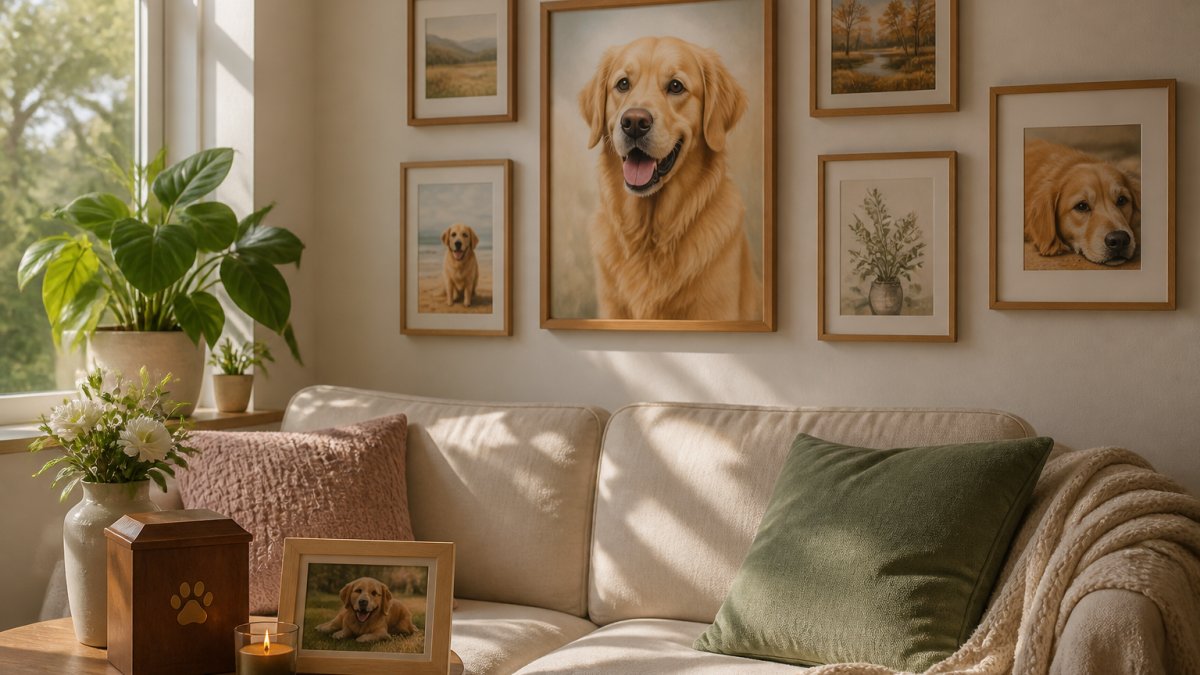
A small ritual around the portrait
One of the loveliest things people do is give the portrait a small, quiet ritual. A candle beside it on the anniversary. A fresh flower on the shelf. A pat on the frame as you walk past. It sounds small. It is small. That's the point.
Over time, the portrait stops being "the memorial" and just becomes part of the room. That's when it's doing its job.
Creating a Custom Pet Memorial Portrait from Photo
Creating a custom portrait is simpler than you might think. At Be Artistic Club, we handle the artistic work so you can focus on the memory.
Choosing a style that honours their memory
We have 176 portrait styles, each creating a different feeling.
For a memorial portrait, many people choose styles that feel timeless and respectful. A fine-art black and white portrait feels elegant and serene. A watercolour style feels soft and gentle. A botanical-inspired style with a flower crown feels hopeful and beautiful.
Some people choose a style that matches their pet's personality. If your dog was regal and dignified, a Royal Portrait style might feel right. If they were quirky, something more playful works.
From preview to keepsake
You upload your photo and choose your style. Within about a minute, you see a free preview of what your portrait will look like. This is the moment to check: does this capture them?
If it does, you can order. We offer it as a digital file, a poster, canvas, or framed and ready to hang.
Nothing is printed until you've seen the preview and approved it. That means you know exactly what you're getting before it arrives.
The Emotional Comfort of a Living Space Tribute
There's something powerful about walking into your living room and seeing a portrait of your pet. It's a small moment, but it happens every day.
On hard days, the portrait is there. On good days, it reminds you of the joy they brought.
A memorial portrait is a conversation starter. It gives you permission to talk about your pet. To say their name. To share stories. That matters more than you might think.
Frequently Asked Questions
Why should I display a pet memorial portrait in my living room rather than a bedroom?
Your living room is where life happens. It's where you gather, relax, and spend quiet moments. A pet memorial portrait there becomes part of your daily rhythm, not something hidden away. Seeing your companion's face while you're on the sofa with a cup of tea, or during an evening with family, keeps their memory woven into your life rather than confined to grief. It transforms a space of loss into a space of connection.
How do I choose the right photo for a pet memorial portrait?
Look for a photo where your pet's personality shines through. Natural light works best, and their face should be clear and visible. Avoid heavily filtered or blurry images. The photo doesn't need to be a perfect pose, often the most meaningful portraits come from candid moments that capture who they really were. A photo of them sleeping, playing, or just being themselves tells their story better than a formal shot.
What style of portrait works best for a pet memorial?
This depends on your home and how you want to remember them. A fine-art black and white portrait like Studio Noir creates a timeless, dignified tribute. A botanical-inspired style like Wildflower Crown adds gentle beauty. Watercolour styles soften the image and evoke warmth. The best choice reflects both your pet's personality and what brings you comfort when you look at it.
How can I display a pet memorial portrait without making my living room feel like a shrine?
Scale and placement matter. A medium-sized portrait as part of a gallery wall with other art or family photos feels integrated, not isolated. Hang it at eye level where you naturally look, paired with objects that reflect your life together, books, plants, or other meaningful items. The goal is a living memorial that feels like part of your home's story, not a separate memorial space. One thoughtful portrait among other art creates balance and warmth.
A pet memorial portrait in your living room is a way of honouring a relationship that shaped your life. It's not about forgetting the pain of loss, it's about celebrating the love that came before it. When you're ready to create that portrait, choose your style and upload a photo that captures who your pet was. We'll turn it into something you can live with, something that brings comfort every single day.