Alternatives to Traditional Oil Painted Pet Portraits · Lily & Hendrix

Table of Contents
- Why Pet Owners Look Beyond Oil Paintings
- How to Choose a Custom Pet Portrait from Photo
- Watercolour, Acrylic and Pastel: A Medium Comparison
- Digital Pet Portrait Styles and Modern Alternatives
- What Affects the Cost of Alternatives to Oil Painted Pet Portraits
- Displaying Your Portrait: Canvas, Framed or Digital
- Frequently Asked Questions
Last Updated: September 27, 2026
Why Pet Owners Look Beyond Oil Paintings
Oil painted pet portraits have a long history, but they are no longer the only way to turn a favourite photo into wall art. At Be Artistic Club, we hear from plenty of owners who want the feeling of a painting without the traditional oil commission.
The appeal of oil is real. It is rich, slow to dry, and built to last. But it is also heavy, expensive and unforgiving. One wrong brushstroke and the artist starts again.
So people look elsewhere. Watercolour, acrylic, pastel, digital illustration and modern print-on-demand services all offer something oil cannot: speed, range and a gentler price. Below, we break down what each option actually gives you, what it costs, and how to choose a photo that makes any style sing.
How to Choose a Custom Pet Portrait from Photo
A custom pet portrait from photo starts with one good image and one clear decision: which style suits your pet's personality. Get those two things right and the rest is straightforward.
Here is how to work through it:
- Pick the photo first. Style can wait. A sharp, well-lit photo matters more than any medium.
- Match the style to the mood. A regal hound suits a royal oil dog portrait. A soft, sleepy cat suits something quieter.
- Decide on format. Digital file, poster, canvas or framed. Each changes how the piece lives in your home.
- Check the preview. A free preview before you buy removes most of the risk of custom art.
- Confirm turnaround. Some methods take days, others take weeks.
Be Artistic Club turns your photo into a painted portrait with a free preview in about a minute, and every piece is checked and adjusted by Lily, a real person, before it is printed.
What Makes a Good Reference Photo
A good reference photo is bright, sharp and shows the face clearly. Natural light works best. Avoid screenshots, heavy filters and anything where your pet is hidden behind a couch or another animal.
If your only photo is older or slightly soft, that is usually fine. A good artist works with what you have and preserves the details that matter: fur markings, the shape of the ears, the expression in the eyes.
Watercolour, Acrylic and Pastel: A Medium Comparison
Watercolour is a soft option, acrylic is flexible, and pastel is textured. Each behaves differently on the page, and each suits a different kind of pet and home.
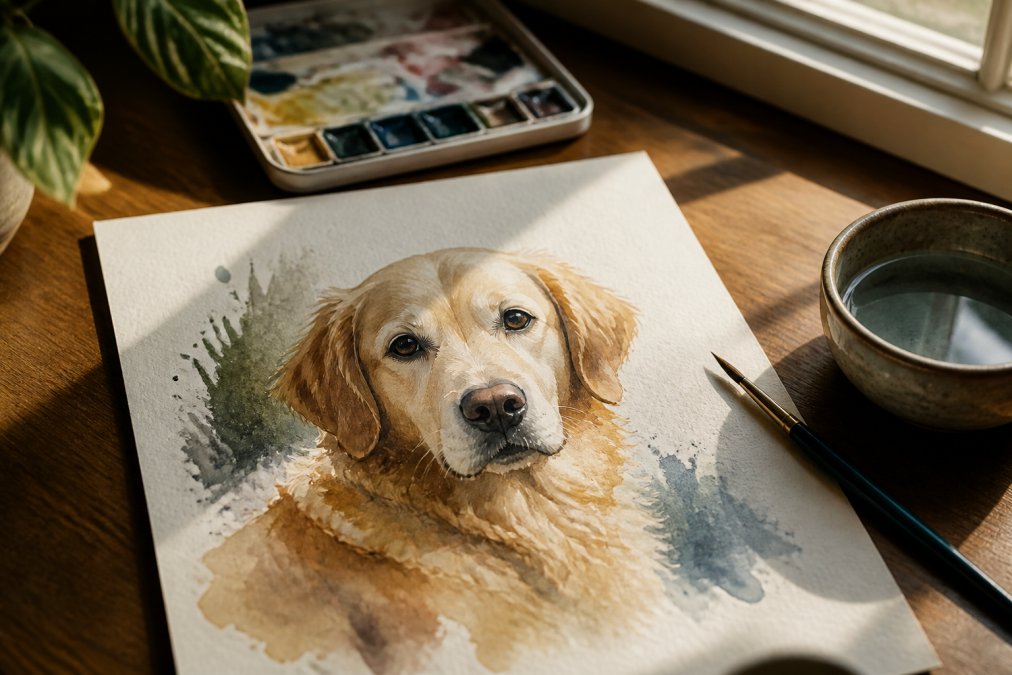
Watercolour lets colour bleed and blend. It is gentle and beautiful for lighter coats and airy rooms. Acrylic dries fast and holds bold colour, which makes it strong for dark fur and dramatic contrast. Pastel sits on the surface of textured paper and gives a chalky, velvety finish that photographs beautifully.
But here is the thing most guides skip: the medium is only half the decision. The other half is what the piece is actually made of and how it gets to your wall.
Oil vs Watercolour vs Pastel at a Glance
| Medium | Look | Drying Time | Best For | Cost Feel |
|---|---|---|---|---|
| Oil | Deep, glossy, layered | Weeks | Formal, traditional rooms | Highest |
| Watercolour | Soft, translucent | Minutes | Light coats, airy spaces | Moderate |
| Acrylic | Bold, matte to gloss | Under an hour | Strong contrast, dark fur | Moderate |
| Pastel | Chalky, velvety | Never fully dries | Texture and soft detail | Moderate |
| Digital | Clean, endlessly adjustable | Instant | Fast turnaround, gifting | Lowest |
Oil takes the longest and costs the most. Watercolour and acrylic sit in the middle. Digital sits at the bottom on both counts, which is why so many people start there.
The Alternatives Most Guides Forget
Painting is not the only way to put a pet on a wall. A few non-painting routes have quietly built their own followings, and they solve problems oil never could.
How to Decide in Five Minutes
Ask yourself three questions, in this order:
- Where will it hang? A busy hallway wants something quiet. A big empty wall wants something with presence.
- What is the light like? Dark, dramatic pieces need a wall that is not already busy. Soft pieces can handle more colour around them.
- What is the mood? A regal hound suits a royal oil dog portrait. A sleepy cat suits something softer, like Windowsill Sun.
If you are still torn, order the digital file first. You can print it at any size later, and you will know exactly what the portrait looks like before committing to a framed piece.
A Note on Materials
If sustainability matters to you, ask what the piece is printed or painted on. Recycled and FSC-certified papers, water-based inks, and vegan-friendly finishes are increasingly common, and they do not cost more. It is a fair question to ask any maker, and the good ones will answer it happily.
Digital Pet Portrait Styles and Modern Alternatives
Digital pet portrait styles have quietly become the most popular alternative, and for good reason. A digital piece is created from your photo, adjusted until it looks right, and delivered as a high-resolution file you can print at any size.
What Affects the Cost of Alternatives to Oil Painted Pet Portraits
Cost in this category comes down to four things: the medium, the size, the format and the turnaround. Traditional oil is priced by the artist's hours and reputation. Alternatives are priced by materials and production.
Here is what moves the number up or down:
- Medium. Digital is the least expensive. Canvas and framed prints cost more because of materials and shipping.
- Size. Larger canvases use more material and cost more to ship.
- Format. A digital file is one price. A framed, ready-to-hang piece is another.
- Turnaround. Rush jobs cost more. Made-to-order pieces take longer but cost less.
- Number of subjects. Two pets or a pet with an owner takes more work than one.
The Budget Path Most Guides Skip
Not everyone wants to commission a piece, and not everyone can. There is a middle road that sits between a full commission and doing nothing at all, and it is worth knowing about even if you end up going the professional route.
What You Are Actually Paying For
With a traditional oil commission, most of the price is the artist's time, often weeks of it. With a modern alternative, most of the price is the production and the shipping. That is why the gap between the two is so wide, and why it is not really a quality comparison. It is a different model.
A few things worth checking before you buy anywhere:
- Is there a preview? A free preview before you pay removes most of the risk.
- Is a real person reviewing it? At Be Artistic Club, every portrait is checked and adjusted by Lily before it is printed.
- Where is it printed? In-region printing means shorter shipping and less chance of damage. Be Artistic Club prints through Gelato, with delivery in 3 to 5 days.
- What is the returns position? Custom work is often exempt from change-of-mind returns, so know the policy before you order.
A Quick Word on Value
The cheapest option is not always the best value, and the most expensive is not always the best piece. A digital file that you print at your local shop and frame yourself can look good on the wall. What matters is whether the face on the wall is the face you love.
Displaying Your Portrait: Canvas, Framed or Digital
Canvas suits a main wall and needs no frame. A framed print suits a hallway or a shelf, and gives you control over the finish. A digital file is the most flexible: you can print it small for a desk or large for a feature wall, and you can send it to family overseas at no extra cost.
Frequently Asked Questions
What are the best modern alternatives to traditional oil pet portraits?
Watercolour, acrylic, pastel and digital styles all offer something oil cannot. Watercolour gives soft, light-filled washes that suit gentle or memorial pieces. Acrylic holds bold colour and texture. Digital styles can be printed on canvas or framed at home. A custom pet portrait from photo services now let you preview the artwork before you commit, so you can see how your pet looks in each style without commissioning a painter blind.
How do digital pet portrait styles compare to traditional oil paintings?
Traditional oil paintings carry texture, depth and a physical brushstroke you can feel. Digital pet portrait styles offer faster turnaround, lower cost and the freedom to try several looks before choosing one. The best digital work still preserves fur markings, deep tones and expression. Many people find a digital portrait printed on canvas gives them the visual warmth of a painting with far less waiting and no risk of a mismatched commission.
How much does a custom pet portrait cost?
Pricing depends on the medium, size and format. Commissioned oil paintings from an artist typically run into the hundreds or more, with weeks of turnaround. A custom pet portrait from photo service starts lower. At Be Artistic Club, a digital portrait is $69 AUD, and a Custom Pet Art Portrait starts at $79.00, with poster, canvas and framed options available. You see a free preview before you pay.
Can I get a custom pet portrait that looks like a fine art photograph?
Yes. Hyper-realistic digital illustration and fine art printing can get very close to a photograph while keeping a painterly feel. The key is a sharp reference photo with good lighting and visible fur detail. Upload one clear image, and the portrait is built from your pet's actual markings and expression. Styles like Studio Noir give a fine-art black and white look, while acrylic and linen styles lean more painterly.